you are here:
Working Together in Solomon Islands
15 June 2010
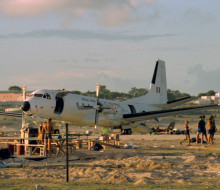
For almost a decade the multi-national Regional Assistance Mission to the Solomon Islands (RAMSI) has been operating to restore law and order to a nation that was debilitated by civil unrest. Since then, RAMSI has moved to stabilise the Solomon Islands and is helping rebuild communities through development programmes.
One such programme is the Community Outreach Programme. It aims to engage with remote communities, listen to their concerns, and find ways to resolve or highlight their issues to the Solomon Islands Government.
In May a small contingent of New Zealand Police, Defence Force personnel and local Government advisers participated in the programme. They embarked on a ten hour boat voyage to Santa Isabel Island – one of hundreds of inhabited islands that make up the Solomons. The contingent visited a number of communities including Papatura Island, Baolo, Koloaskia and Kia.
Advisor Kylie Newton, Participating Police Force (PPF) Community Relations Team Leader, said “while we were in the villages we first met the chief of the village. This was important as traditionally nothing happens in a village without his support and consent.”
With the Solomon Islands Government elections set for sometime in July or August, the contingent also spoke about the election, the voting process and the importance of voting integrity. Mr Newton “found that the most common feedback was ‘we want to see Police here more often’.”
“Without exception, we were very welcome in each of the villages we went to. It was very humbling to be greeted with traditional songs from the village where everyone sang.”
“The villages, mostly built on the coast, were very impressive in their size. One or two were very well laid out, impressively clean and well swept. The villages consisted of traditional huts made from local materials, and all were well maintained.”
“The most memorable moment of the trip for me was the way in which the locals welcomed us. At one village, we all sang the Sunday school hit ‘Son of Abraham’ complete with actions which was hugely funny as everyone really got in to it.”
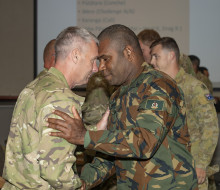
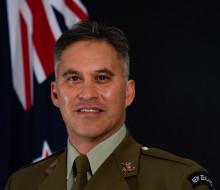
Another highlight of the trip was the opportunity to share different cultural experiences. Major Ian Piercy, Deputy Commander of the Combined Task Force, which is the military component of RAMSI, reciprocated his appreciation of the Chiefs allowing RAMSI into their villages. With the strength of an infantryman he conducted a one-man Haka that made the children react with excitement and scream in fascination at his warrior-like disposition. This immediately had the effect of engaging the local villages as they were able to relate to the cultural exchange and felt comfortable in sharing their views with the group.
The contingent had one last task to complete before departing Santa Isabel. Major Piercy bought three turtles that had been captured by a local fisherman in the hope that they could be set free.
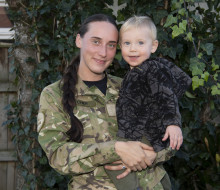
Corporal Linda Tompson said the endangered animals “appeared in good health, and, as there were three turtles and three Kiwi’s, we each took one, held them upright and placed them on the sand close to the water. They took off pretty quickly (for turtles) towards the sea.”
CPL Tompson got into her swimmers and swam with a turtle before it disappeared into deeper waters. “Knowing that it is a once in a life time experience, I was very excited.”
When asked what were some of the memorable moments of the several days she spent touring the villages, CPL Tompson said “at Kolopakisa playing with the kids, trying to surf on a stand up paddle board and watching out for crocs at the same time,” were great experiences.
Mr Newton said he “would absolutely return to the villages given the opportunity, and as with anything where you have the benefit of hindsight, take more with me for the locals, either by way of materials for their village or resources for the children.”
Major Piercy said it was an honour and privilege to serve in this mission and have the satisfaction of being able to help where we can. He said the turtle release programme was a great initiative to help the population of turtles survive and at the same time highlight to the local villages the benefits of environment sustainability.
The most memorable part of the trip for Major Piercy was accepting the village’s hospitality and deep respect, particularly for any New Zealander in a soldier’s uniform. This was evident in every village we visited. “The Kiwis are held in very high regard throughout the antipodes. It is a very humbling experience to meet such proud and honourable people.”
From a military perspective conducting these patrols into the provincial rural areas is vital. They firstly remind the total populace that the military forces are still present and this presence acts very much as a deterrent to any criminal elements and provides the environment for the other agencies involved in RAMSI to conduct capacity building within Solomon Islands. It also allows the locals to have the confidence to resume a normal lifestyle, villages to function as the Solomon Islands culture dictates and the future generations to grow and prosper in a safe and stable country.
This page was last reviewed on 20 July 2010 and is current.