you are here:
NZDF Prepares to Deliver Youth Development Programmes
16 March 2010
In August last year the government announced a range of initiatives aimed at helping young New Zealanders develop the skills needed to enter the workforce.
Included in that announcement was $19 million of funding specifically for the Ministry of Social Development (MSD), Ministry of Education to purchase a range of programs and activities for youth from the New Zealand Defence Force.
The Defence Force will expand the LSV course from Christchurch to Wellington and Auckland and support to a number of new service academies at secondary schools throughout New Zealand. Military Activity Camps (MAC) for youth offenders and provide support to a variety of other courses run in conjunction with the Police and a variety of non-governmental organisations partners will also be delivered.
The $19 million of new money for the youth activities means the NZDF can meet the needs of our partners and New Zealand youth without having any impact on core NZDF activities.
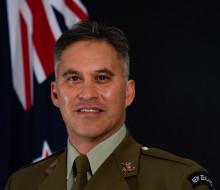
Director of Youth Development, Captain Clive Holmes of the Directorate of Reserve Forces and Youth Development, HQNZDF, leads the Youth Development work.
Captain Holmes’ Deputy is former Army Colonel Bernard Isherwood who was recruited in late 2009 to lead the development of the NZDF capability required to deliver the Youth Development programs. Bernard Isherwood has been responsible for the creation of the Youth Development Unit (YDU), a national delivery model, establishing facilities and recruiting staff to deliver the programs.
The Defence Force has recruited 89 new staff, all either serving Reservists, Regular Force personnel or ex-Regular Force Army, Navy or Air Force personnel, on specific youth development contracts, to deliver the programmes. All staff have undergone background checks and must undertake a five day training course at Burnham before being approved to work on the Youth Development programmes.
The programmes and activities will be delivered by the YDUs based at Burnham (YDU South), Trentham (YDU Central) and Hobsonville (YDU North). YDU HQ will be at Burnham.
Most members of the Defence Force can look back on their own basic or initial entry training and understand how it changed a disparate group of individuals into a strong and united team through shared adversity and being pushed beyond their comfort zones.
This is what the NZDF, and no other part of the New Zealand society, is uniquely able to do for New Zealand youth. The government has acknowledged the valuable and very real role the Defence Force can play in working with some of the most vulnerable New Zealanders to help them become active and contributing members of our society.
Youth Development Programmes
The three primary Youth Development programmes run by the Defence Force are:
LSV
The successful Limited Service Volunteer (LSV) course has been run at Burnham for more than 10 years. The value of the LSV course has been recognised by the government’s initiative to expand the course to Wellington and Auckland.
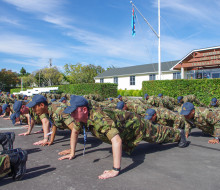
YDU units at Burnham, Trentham and Hobsonville will deliver the LSV course in those locations. New facilities at Hobsonville in Auckland, Trentham in Wellington and the existing LSV Company facilities in Burnham will be used for the delivery of the LSV courses. In 2010, there will be 15, 6 week LSV courses at Burnham, Trentham and Hobsonville for almost 2000 trainees.
Service Academies
Nineteen secondary schools run service academies which provide a learning environment for students who are in danger of dropping out without the skills needed to join the workforce. The academies are run by the school which hosts them with support from local YDU staff.
Every service academy student attends an induction course at Waiouru run by YDU staff before beginning the school year. During the school year, service academy students undertake a normal school day supplemented by physical activities and guided by the values and ethos they have learned during their induction course.
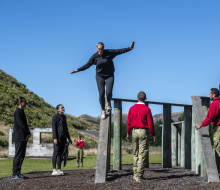
During the year, students will undertake demanding physical activities under the supervision of YDU staff but the day-to-day running of the academy will not involve the YDU.
Military Activity Camps
YDU staff at Burnham and Hobsonville will also deliver MAC for the MSD. The MAC scheme is designed to expose young offenders to physical and team building activities to broaden their horizons and encourage them toward alternatives to offending.
MAC participants will not be staying on Defence Force establishments but will use facilities like the confidence and high ropes courses. The MAC activities are part of a broader program that aims to change the behaviour of the young offenders and only the physical activities involved in the course will be delivered by the Defence Force.
Other Programmes
YDU staff in Burnham have been involved for some years in the delivery of a variety of programs with organisations like the NZ Police and other groups. These programs are aimed at youth, have proven to be very successful and will continue to be run by YDU South staff, in conjunction with the additional providers, for approximately 2000 young people per year.
Youth Development – Myth and Reality
Since the announcement that the Defence Force will be running youth development programs, a number of myths have gained currency in some parts of the Defence Force. These myths are about the youth programs and the impact the YDU activities will have on the activities and operations of the Defence Force. The most common myths surrounding youth development are addressed here:
Myth: “These programmes take resources away from training”
The government has committed $19 million of new money to allow the Defence Force to provide these activities, none of the money paying for YDU activities has come from the Defence Force training budget. No military unit is missing any training because of YDU activities.
All of the staff working on YDU activities have been hired specifically to undertake work with youth, they have not been taken from other units or training establishments and their presence at the YDU will not stop any NZDF activities being undertaken.
Myth: “These activities are boot camps”
Nothing the Defence Force is doing can be called a boot camp. Boot camp is a US term typically used to describe a youth justice activity characterised by harsh discipline and rigidly enforced behavioural standards run as a punishment. Some media have used the boot camp label but typically have stopped using it, once they gain an understanding of what is involved and how the YDU programmes differ from what they perceive to be a boot camp.
All participants on the YDU programmes are volunteers and none have been forced to attend the programs against their will. While there is a strong element of discipline integral to all the courses, this is no more than would be expected on any basic or initial entry military training and which provides the frameworks and boundaries by which military life is lived.
‘Boot camp’ is a pejorative label typically used by critics of the schemes who neither understand what the programmes involve or support them. Using the term ‘boot camp’ to describe the YDU activities is both ignorant and offensive to the YDU staff and specialist instructors.
Myth: “The NZDF is becoming a social welfare agency”
The Defence Force is not, and never will be, a social agency. The reality of the YDU activities is that the government has acknowledged the valuable and very real role the Defence Force can play in working with some of the most vulnerable New Zealanders to help them become active and contributing members of society.
The fact that Defence Force personnel and training can make such significant contribution in such an important area is a compliment to the Defence Force. All members of the Defence Force should take pride in the fact that the NZDF can provide this training and has been chosen to do so.
Youth Justice and the New Zealand Defence Force
By Chief Youth Court Judge Andrew Beecroft
Historically, the Forces and particularly the Army has had a bad press regarding its involvement with youth justice and youth offenders. Largely this is due to old fashioned ideas about the army and in particular the concept of ‘boot camps’. The modern Army seems to me to be a changed organisation and no longer conforms to the old stereotypes.
The term ‘boot camps’ is value laden and misused. It connotes ‘out of date’ concepts of mindless activities, authoritarian discipline and concentrated regimes of punishment and forced marching. This is a creation of the United States. These sorts of boot camps for serious young offenders do not work. The re-offending rates were up to 92%. It is better that we dispense with the term.
The modern Defence Force has much to offer the youth justice system. Recently I visited a Limited Service Volunteer (LSV) course in Burnham. I was there at Day One. I was also there for the graduation / passing our ceremony. That course involved developing life skills, a three –day, fifty- kilometre tramp, use of the confidence course, outdoor activities, etc; and seminars on developing a curriculum vitae and preparing for employment with Work and Income New Zealand case officers were provided. I was greatly impressed and encouraged by the quality of the programme and the quality of the personnel involved. They seemed to me to be men and women of high character, great competence and considerable personal ability and charisma. They were great role models for the young adults who were part of the LSV programme.
Separately, I have also seen the Youth Life Skills programme for 14-16 year olds attached to the LSV. I knew little about this programme. Again, I was hugely impressed by the dedication of the staff involved and the quality of the services that appear to be being provided.
I am excited by the possibilities provided by the expansion of the LSV course to West Auckland and Trentham, in Wellington. I understand that the Youth Life Skills programme will also be attached to each of these courses. The Youth Court deals with 14-16 year olds, but there will be some who offended as 16 year olds but who are 17 and will be much helped by involvement in an LSV course. I also see potential for the Defence Force skills being used as part of a intervention programme for very serious young offenders. Providing a military style outdoor wilderness programme as an initial component and part of a much longer intervention rehabilitation package has exciting potential. The Army has great skills and ability in this area and could very helpfully supplement long-term intervention programmes involving clinical psychologists, mentoring, job creation, drug and alcohol counselling and the like. In this way, intervention provided by the Defence Force using its skilled personnel and plant would be an important part of the intervention, but not the whole. Old fashioned concepts like ‘boot camps’ do no justice to what could be developed under this kind of collaborative model. There is also potential for Defence personnel with a real interest in working with young offenders to develop their skills in this area and perhaps even to work full time in the youth justice sector.
This page was last reviewed on 22 March 2010 and is current.